
Free dust collector heat loss calculator
What is dust collector heat loss costing your shop?
Every cubic foot your collector blows outside gets replaced with air you paid to heat. Enter your ZIP and airflow to see the cost.
Updated by Höcker North America.
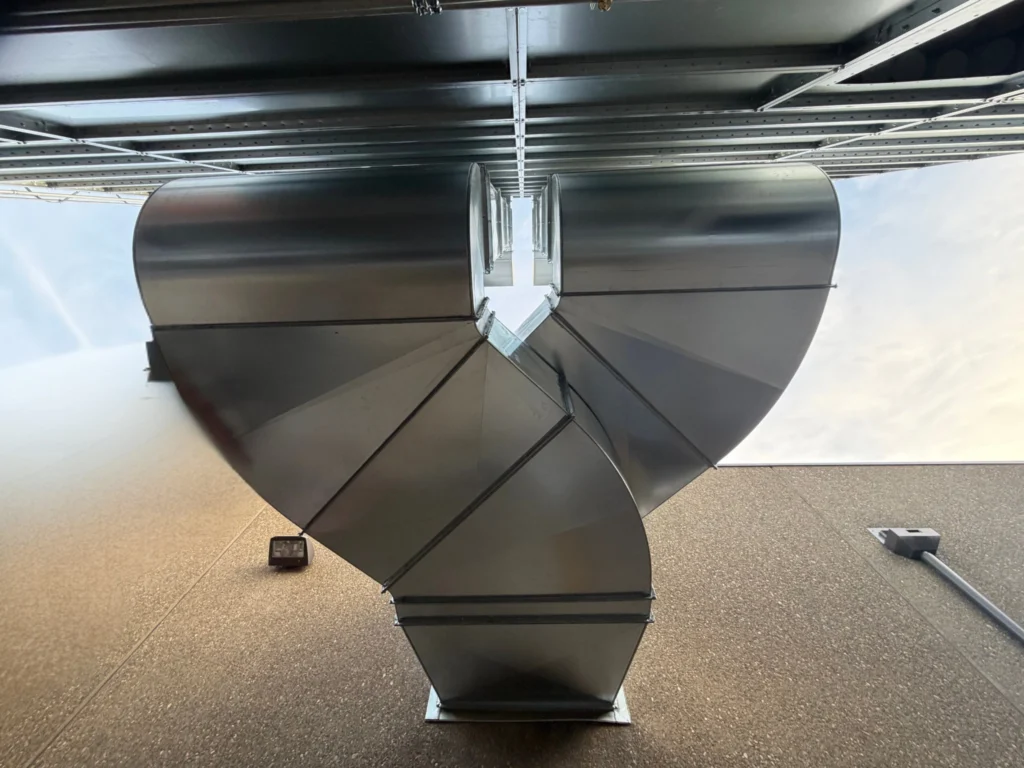
Dust collector heat loss calculator
Your ZIP loads local fuel prices and winter temperatures. Until then, U.S. averages are used.
Filled in for you. Change any number to match your shop.
A Höcker system filters your air before it returns into your building, in less than a second.
Planning estimate for one collector that exhausts outdoors. See the math.
Quick answer
How do I calculate dust collector heat loss? Multiply 1.08 × CFM × the inside-to-outside temperature difference to get Btu per hour. Divide by your fuel's heat content and heater efficiency, then multiply by your fuel price. At the U.S. average commercial gas price, 10,000 CFM at a 38°F difference costs about $5 an hour.
What you get, free
Your heat loss report shows what to do about it
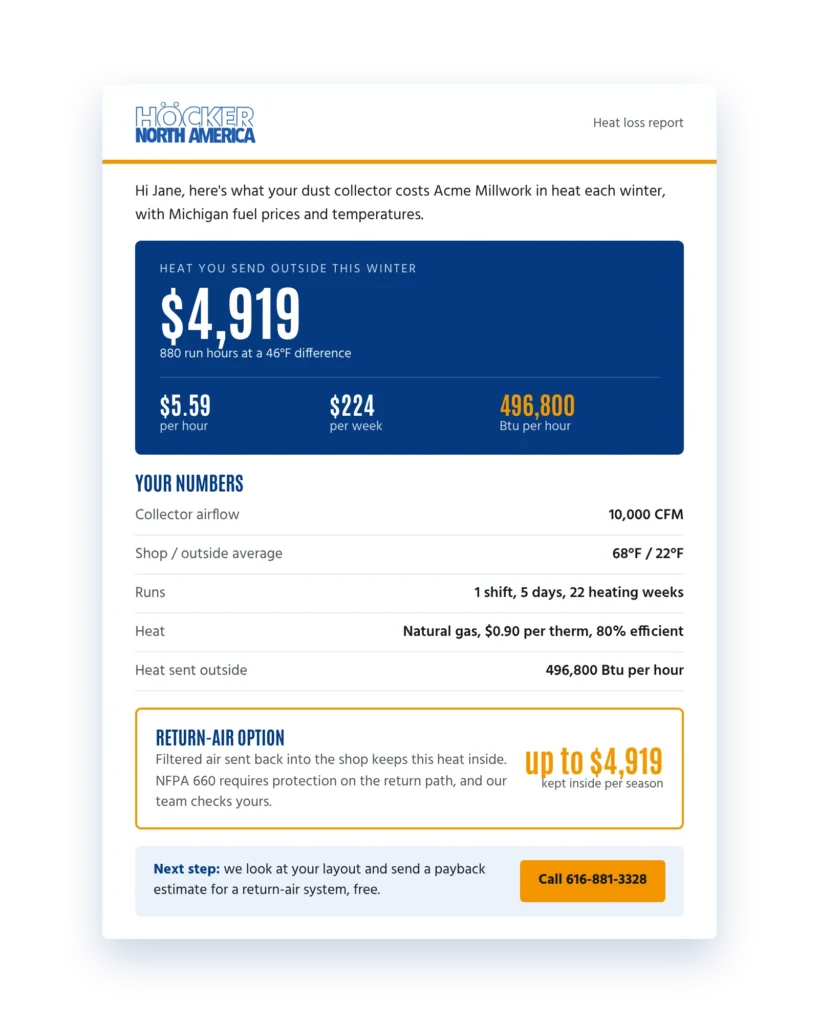
Your season cost
Per hour, per week and per heating season, with your local fuel price.
Return-air option
How much heat filtered return air would keep inside your building.
NFPA 660 return-air check
Return air needs protection on its path. Our team checks yours.
Payback estimate
What a return-air system costs against the heat it saves.
How heat loss works
Exhausted air leaves with the heat you paid for
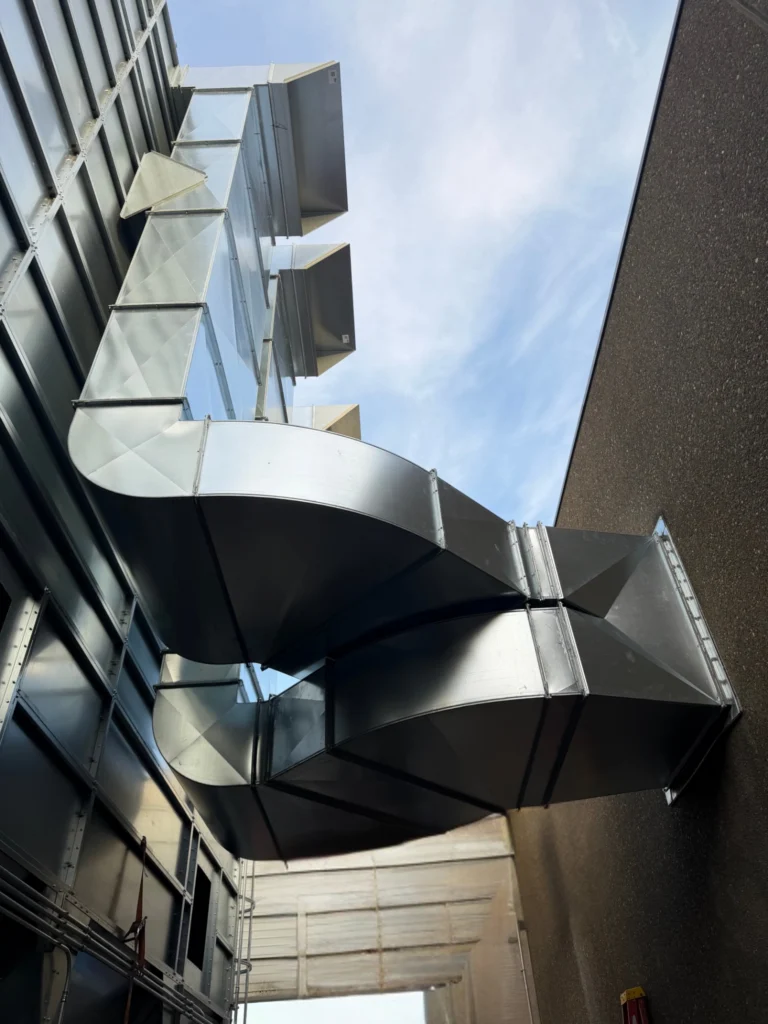
Where the money goes
A collector that blows outside pulls the same volume of air back in through doors, gaps and makeup air units. In winter, your heaters warm every cubic foot of it.
Keep the heat inside
A Höcker system filters your air before it returns into your building, in less than a second. The heat you paid for stays in your shop.
of the heat energy stays inside at Woodland Horizon, a cabinet maker in Ontario, where a MultiStar returns filtered air to production. Fire dampers and a filter monitor protect the return path. Read the story
Yearly gas cost by airflow and climate
| Air sent outside | Mild | Average | Cold |
|---|---|---|---|
| 2,000 CFM | $750 | $1,500 | $2,250 |
| 5,000 CFM | $1,870 | $3,750 | $5,620 |
| 10,000 CFM | $3,750 | $7,490 | $11,240 |
| 20,000 CFM | $7,490 | $14,980 | $22,470 |
Two shifts, five days a week, 80% efficient gas heat at the U.S. average commercial price ($10.07 per thousand cubic feet, EIA). Mild, average and cold mean 2,500, 5,000 and 7,500 heating degree days.
Show the math and assumptions+
Btu per hour = 1.08 × CFM × (shop temp minus outside temp). Fuel per hour = Btu per hour ÷ (fuel heat content × heater efficiency). Cost = fuel per hour × price × hours × days × heating weeks.
| Fuel | Heat content | U.S. average price | Default efficiency |
|---|---|---|---|
| Natural gas | 100,000 Btu per therm | $0.97 per therm | 80% |
| Propane | 91,452 Btu per gallon | $2.55 per gallon | 80% |
| Electric | 3,412 Btu per kWh | $0.13 per kWh | 100% |
Your ZIP code fills in your state's commercial gas and electric prices, its propane price, and its December to February average temperature. Heating weeks follow from that temperature, from 24 weeks in the coldest states down to 8 in the warmest. Change any number to match your bills.
A planning number. Humidity, altitude, wind and your makeup air setup are not included.
We used to pay about $1,200 a month for gas and only heated 8,000 square feet of the old building during the winter. Now we're heating 37,000 square feet under one roof and our average gas bill this past winter was about $200 per month.
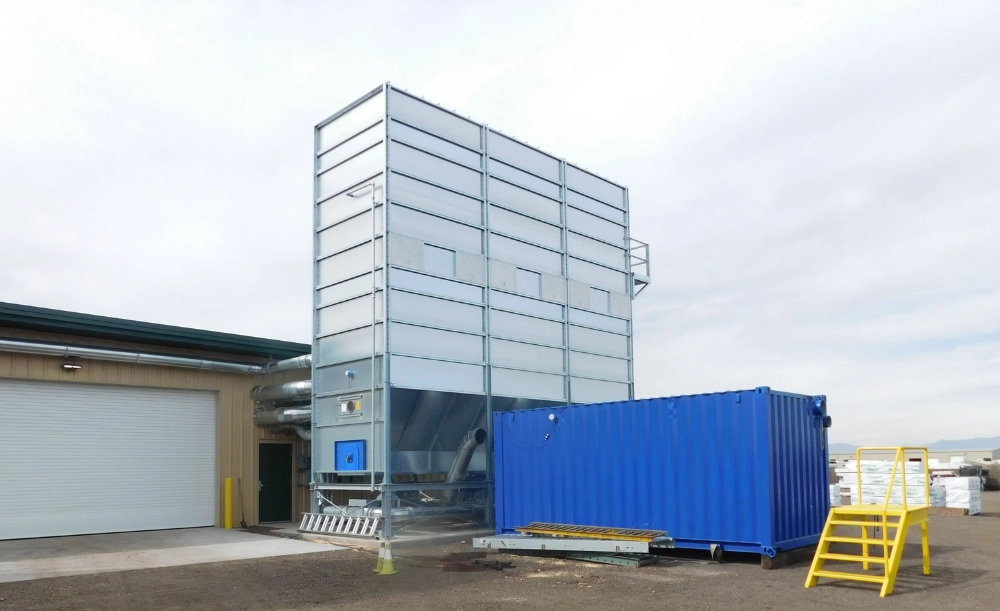
Case study
General Building Materials heats 37,000 sq ft for about $200 a month
A Höcker briquetter turns their wood waste into fuel for a boiler that heats the whole plant, so the gas bill stays low while the heated space grew more than fourfold.
Read the case studyRun more numbers
Questions
Dust collector heat loss FAQ
How do I calculate dust collector heat loss?
+
Multiply 1.08 × CFM × the temperature difference to get Btu per hour. Then divide by your fuel's heat content and heater efficiency, and multiply by your fuel price.
What is makeup air?
+
It's outside air that replaces the air a building exhausts, so in winter it has to be heated.
Where do I find my dust collector's CFM?
+
Check the nameplate, but use the airflow it actually runs at, because that's often below the max rating. The CFM calculator can estimate it from your machines.
Where do the fuel prices come from?
+
Your ZIP code loads your state's average commercial natural gas and electricity prices and its residential propane price from the U.S. Energy Information Administration. Use the price on your own bill if you have it.
Is it safe to return dust collector air to the shop?
+
Yes, when the system is designed for it. NFPA 660 requires protection on the return air path, and Höcker systems also monitor the dust left in the returned air.
How accurate is the heat loss estimate?
+
It's a planning number, since it doesn't account for humidity, altitude, wind or your makeup air setup.
Sources: U.S. Energy Information Administration (Natural Gas Annual 2024, commercial prices by state; Electric Power Annual 2025, commercial prices by state; residential propane prices, 2025-26 heating season); NOAA statewide December to February average temperatures.